
Most CFOs walk into board meetings hoping the financials land well and walk out wondering what just happened. If your board defaults to a scarcity mindset, asks the same questions every quarter, or gets stuck in the weeds instead of thinking strategically, the problem usually isn't the numbers. It's the setup.
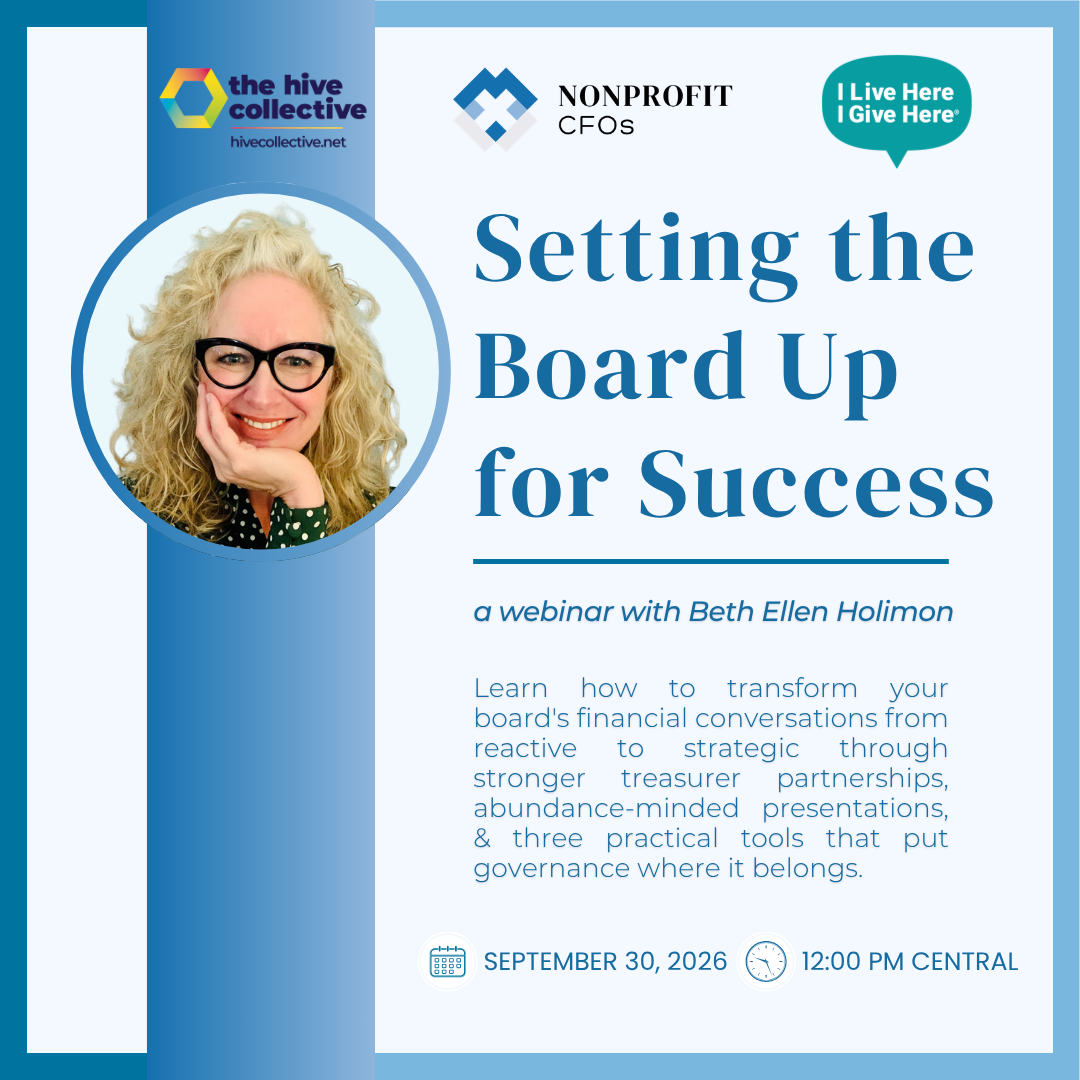
If you've ever felt like you're presenting to the board rather than strategizing with them, this webinar is for you.
This webinar was designed for nonprofit executives and board members, accounting and finance leaders, as well as anyone else who want to stop managing board reactions and start shaping board conversations. You'll leave with a clearer understanding of why boards behave the way they do around financial information and exactly what you can do about it.
Whether you're navigating funding uncertainty, trying to build a stronger relationship with your treasurer, or simply looking for a more strategic role in board governance, you'll leave with practical tools, a new framework, and the confidence to set your board up for the success your organization needs.
Co-Sponsors: Nonprofit CFOs, I Live Here I Give Here & The Hive Collective
What This Webinar Covers:
The Treasurer Relationship The treasurer isn't just a board member who likes spreadsheets — they're your most important ally in the room. We'll talk about why the treasurer's real job is to translate, not validate, and why meeting with them before financials ever reach the full board can change everything. You'll also learn what it costs you when the treasurer walks in unprepared, and how a well-structured consent agenda can protect the room for the conversations that actually matter.
Abundance vs. Scarcity Boards don't default to panic because they're difficult — they default to panic because of how financial information is presented to them. We'll break down how your presentation choices are actively triggering one mindset or the other, and what it looks like when a board is operating from a place of abundance instead of fear. Simple, clear financials aren't just a courtesy — they're a governance tool, and we'll show you how to use them as one.
Three Practical Tools You'll walk away with three concrete tools you can put to work immediately: a Budget Planning Cadence that maps exactly when and why the CFO engages the board throughout the year; a Staff-Board Partnership Chart that clarifies where financial oversight actually lives so nothing falls through the cracks; and Seven Governance Questions for Uncertain Funding Environments — a ready-to-use resource that helps you shift a board conversation from panic to pattern-thinking when the financial landscape gets hard.